
How To Find International Buyers For Export: A Complete Guide
Key takeaways
- Finding the right partners requires preparation — understanding how to find international buyers for export starts with export-ready products, complete documents, strong branding, and a clear pricing structure.
- Using data-driven tools accelerates buyer discovery — platforms like yTrade help exporters identify active importers, verify credibility, and prioritise high-potential markets using shipment records and HS code analysis.
- Combine multiple channels for maximum reach — trade fairs, B2B platforms, social media, Google search, and cold emails each play a strategic role in how to find international buyers for export, allowing exporters to create a consistent pipeline of qualified global customers.
What to be aware when finding international buyers for export
Expanding into international markets gives businesses the opportunity to grow revenue, diversify risks, and strengthen brand reputation. According to a Deloitte report, small businesses involved in exporting often achieve profits 3 times higher than those operating solely in domestic markets.
However, understanding how to find international buyers for export is not simply about sending quotations or introducing products. It requires a thorough preparation process—from internal capacity and product readiness to documentation, branding, and pricing strategy.
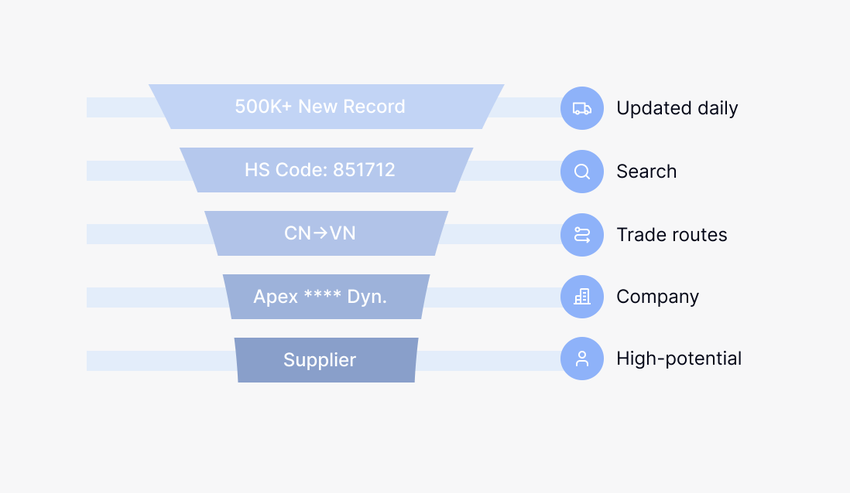
One of the biggest challenges in how to find international buyers for export is confirming which overseas buyers are truly active and aligned with your product. Exporters can rely on platforms like yTrade, the AI-powered global trade data platform, to focus on verified and high-potential opportunities:
- Identify active importers using access to 5+ billion verified shipment and customs records
- Target suitable markets by filtering buyers through HS codes, product keywords, countries, or ports
- Validate buyer credibility by reviewing historical import volumes and supplier relationships
- Reduce unqualified outreach by prioritising buyers from hundreds of millions of importer and exporter profiles
This gives exporters the clarity needed to approach the right partners and strengthen due diligence. Request a personalised demo with yTrade to explore buyers relevant to your product.
To successfully find export customers, businesses should carefully prepare the following:
1. Ensure your products meet international export standards
One of the most common mistakes of new exporters is not thoroughly assessing the “exportability” of their products. Before presenting your goods to global buyers, you should:
- Conduct quality and safety inspections: Your product must meet the regulatory standards of the destination market such as CE (EU), FDA (US), or ISO.
- Evaluate packaging and labeling: Packaging must be strong enough for long-distance shipping and include instructions, safety information, and translated labels that align with the target market.
- Gather feedback from test buyers or previous partners to adjust product specifications, packaging, or formulation when necessary.
A product that meets international standards not only helps businesses overcome technical barriers but also builds early trust with potential global buyers.
2. Complete all legal and import–export documentation
In cross-border trade, even small errors in documents can lead to shipment rejection or unexpected tax penalties. Because each market has its own regulations, exporters must prepare key documents in advance, such as:
- Commercial Invoice
- Packing List
- Certificate of Origin (C/O) and Certificate of Quality (C/Q)
- Export–import licenses and inspection certificates (if the product requires them)
- Transport documents such as the Bill of Lading or Air Waybill
Partnering with an experienced international freight forwarder is a smart and practical choice, helping businesses minimize risks and handle customs procedures more efficiently.
3. Develop professional branding and sales materials
International buyers do not only seek good products; they also evaluate professionalism and reliability. Therefore, businesses should invest in:
- A multilingual website: clearly displaying product categories, certifications, contact details, and internationally optimized SEO content
- A comprehensive Company Profile: summarizing production capacity, scale, core products, and notable collaboration projects
- A detailed Product Catalog: including technical specifications, high-resolution product photos, HS codes, and usage information
These materials help businesses make a strong first impression when global buyers compare hundreds of suppliers at once.
4. Build a transparent pricing and negotiation strategy
In international trade, pricing is not a simple estimate, it must be calculated strategically based on total landed cost and the Incoterms you plan to apply. Exporters must clearly define:
- Total costs including production, packaging, transportation, customs, taxes, and currency risks
- Suitable Incoterms (FOB, CIF, EXW, CFR, etc.) and any price adjustments for high-volume orders
- MOQ (Minimum Order Quantity), delivery schedules, packaging requirements, and sample policies if requested
International buyers value transparency, consistency, and accuracy in quotations as they reflect the exporter’s management capability and level of professionalism.
5. Prepare complete contact information and a clear workflow for dealing with the purchasing officer (PIC)
When starting your search for export customers, it is essential to identify the right decision-maker (Person in Charge – PIC) within the buyer’s organization. PICs typically belong to:
- Purchasing Department
- Procurement Department
- Import–Export Department
- Buyer or Sourcing Specialist
Once you have their contact details (email, phone number, LinkedIn, etc.), you must communicate proactively and professionally about pricing, Incoterms, MOQ, delivery timelines, and shipping documents. A structured and clear communication process significantly increases closing rates and builds trust for long-term contracts.
Even with a clear negotiation workflow, exporters can still face delays if compliance gaps go unnoticed with issues like incorrect HS codes to improper origin declarations or missed screening checks. These challenges often appear only when a shipment is already stuck in customs.
You can learn more in yTrade article on the most common trade compliance mistakes and how to prevent them.
How to find international buyers for export
1. Through trade fairs and exhibitions
Among the most practical methods in how to find international buyers for export, international trade fairs and exhibitions remain one of the strongest channels for export-ready businesses. They allow companies to present products directly, meet qualified buyers, and establish credible trade relationships.
This approach works particularly well for sectors where physical samples and on-site evaluation matter, consumer goods, agriculture, F&B, wood products, handicrafts, industrial components, and textiles. These industries benefit greatly from face-to-face product demonstration and buyer engagement.
A key mistake, however, is attending fairs without market-backed targeting. Before investing in a fair, exporters should use trade data to validate demand and buyer activity by:
- Analyzing trade flows from platforms such as yTrade, UN Comtrade, or ITC Trade Map to see which countries actively import your HS codes.
- Evaluating import growth and market size to identify high-potential regions.
- Studying competitor activity: which markets they sell to and how they position their products (based on shipment destinations and volumes).
This helps exporters choose the right fair, identify the right buyer groups, and present the right product assortment.

To find international buyers effectively through fairs, exporters should structure their participation:
- Choose the right fair and market: select reputable, industry-specific events (e.g., Canton Fair for consumer goods, Anuga/SIAL Paris for F&B, Hannover Messe for machinery).
- Prepare your presence professionally: register early, secure a strategic booth location, and prepare bilingual catalogs, brochures, packaging samples, and product documentation.
- Train booth staff: ensure your team can qualify buyers (Buyer, Procurement, Import Department), communicate product specifications clearly, and record buyer needs accurately.
- Conduct post-event follow-up:
- Consolidate all contacts and meeting notes.
- Send thank-you messages and structured quotations.
- Use yTrade to verify each buyer’s actual import history, shipment volumes, and trade partners, ensuring you focus only on credible prospects.
- Nurture opportunities after the fair:
- Segment leads into immediate, medium-term, and long-term prospects.
- Re-engage through email or LinkedIn with materials tailored to their market’s import patterns and product demand.
When a professional fair strategy is combined with yTrade’s buyer discovery and market insights, exporters can identify the right international buyers faster and convert exhibitions into a consistent pipeline of qualified, long-term export customers.
2. Through B2B e-commerce platforms
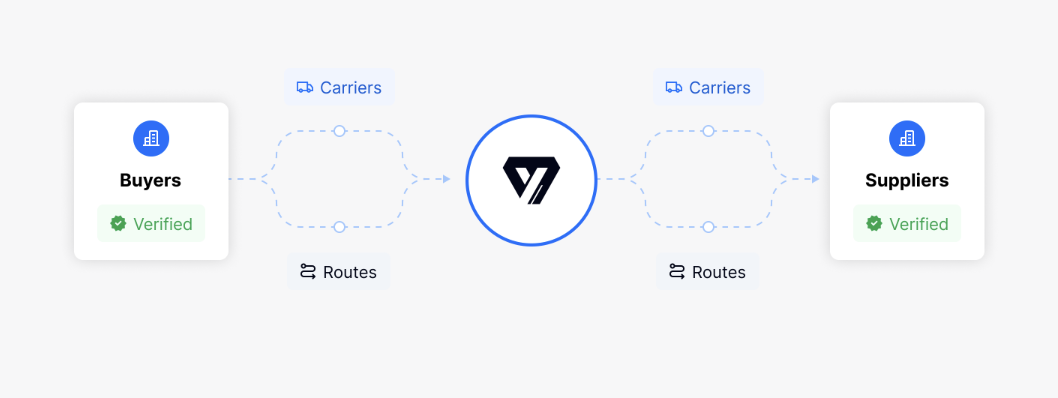
Using B2B e-commerce platforms has become one of the most practical methods in how to find international buyers for export, especially for SMEs or manufacturers who want global reach without the high cost of physical trade fairs. These platforms function like 24/7 online trade exhibitions, where millions of verified international buyers actively search for suppliers by product category, HS code, or origin country.
This channel is particularly suitable for:
- Businesses with export-ready products but limited international marketing resources
- Manufacturers of consumer goods, processed agricultural products, textiles, industrial components, and OEM/ODM suppliers looking for high-volume orders
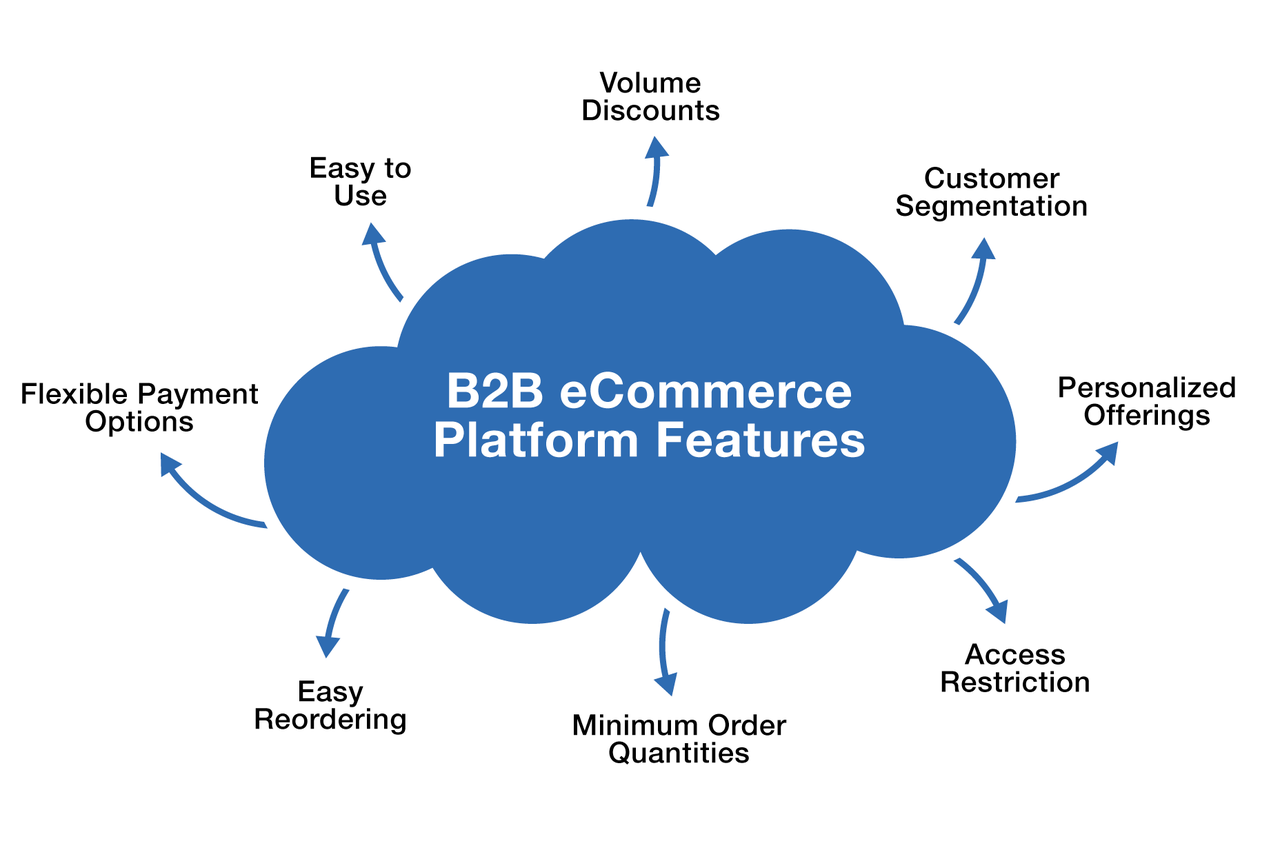
As more buyers shift online, exporters also need to understand how global market dynamics influence demand. Geopolitical tensions, sanctions, and shifting trade alliances are already reshaping where buyers source their products.
For a deeper view of how these factors are altering trade flows, see our analysis: The Impact of Geopolitical Tensions on Trade Flows: An Expert Perspective.
To implement this effectively, exporters should:
- Build a professional digital storefront on reputable platforms such as Alibaba, Global Sources, Made-in-China, Tradewheel, IndiaMART, EC21, or ExportHub, ensuring your company profile is complete, credible, and verified
- Upload detailed product listings with high-quality images, technical specifications, HS codes, reference pricing, and certifications (ISO, HACCP, CE, etc.)
- Respond quickly and professionally to RFQs (Request for Quotations) to build credibility with international sourcing teams
- Use trade data from yTrade to identify which countries and companies are actively importing similar products, allowing you to choose B2B platforms that attract the right buyer segments and higher-probability traffic
Platforms like Alibaba (global multi-industry), ThomasNet (North America), Made-in-China (industrial & technology), or Torg (F&B) give exporters visibility in front of global procurement teams. When combined with yTrade’s market and buyer identification insights, B2B platforms can become a powerful channel to secure long-term export contracts, without needing to attend physical fairs.
3. Leverage social media to your advantage
In the digital era, social media is no longer just a promotional channel, it is a practical tool in how to find international buyers for export, allowing businesses to reach decision-makers directly and build trust at a lower cost than trade fairs or cold outreach. For many exporters, social platforms provide a direct line to Procurement, Sourcing, and Import teams who are actively researching suppliers.
First, to identify the right platform and market.
According to Statista, the most frequently used social platforms among B2B marketers include Facebook (96%), Instagram (82%), Twitter (53%), YouTube (53%), and LinkedIn (50%).
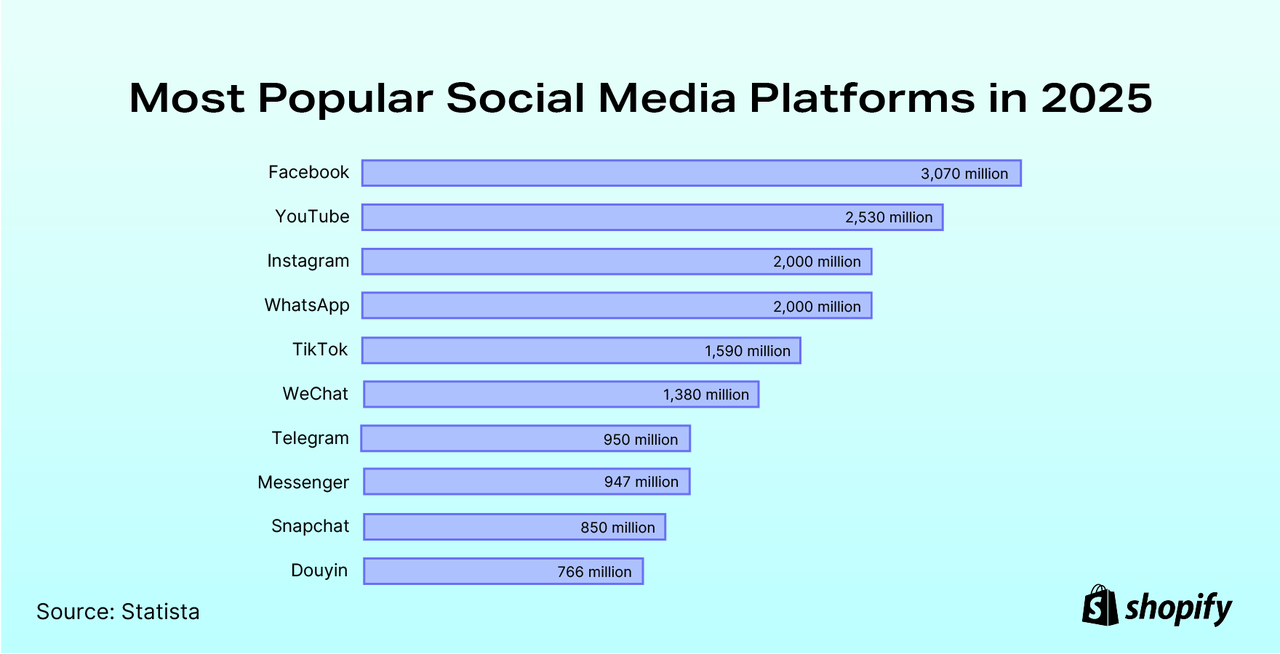
However, each region uses social media differently, so exporters must choose platforms strategically:
- LinkedIn is ideal for reaching buyers in Europe, North America, and high-compliance industries (machinery, components, industrial equipment).
- Facebook performs strongly in Southeast Asia, the Middle East, and emerging markets where purchasing teams engage more actively on social pages and groups.
Selecting the platform that aligns with your target market ensures your content reaches actual import decision-makers.
Secondly, create a professional image and publish valuable content.
Your social media presence often becomes the first gateway international buyers use to assess your credibility. A strong professional profile should include:
- Clear descriptions of your manufacturing capabilities, certifications, and export-ready product lines
- High-quality product photos, factory videos, and process showcases
- Value-driven posts such as market insights, customer success stories, and global import trends
Sharing meaningful content positions you as a knowledgeable partner — not just another supplier — and improves buyer confidence.
Thirdly, connect and interact strategically.
Instead of sending aggressive sales messages, build trust step-by-step:
- Send connection requests with concise, friendly greetings
- Show initiative by referencing prior outreach attempts (“I tried reaching your procurement team earlier and wanted to reconnect here…”)
- Share helpful, relevant resources to start genuine engagement
This is where yTrade becomes particularly useful: you can share market insights or import trends derived from yTrade’s Global Trade Data Center, helping buyers see that you understand their import market, trade volumes, and supply chain dynamics.
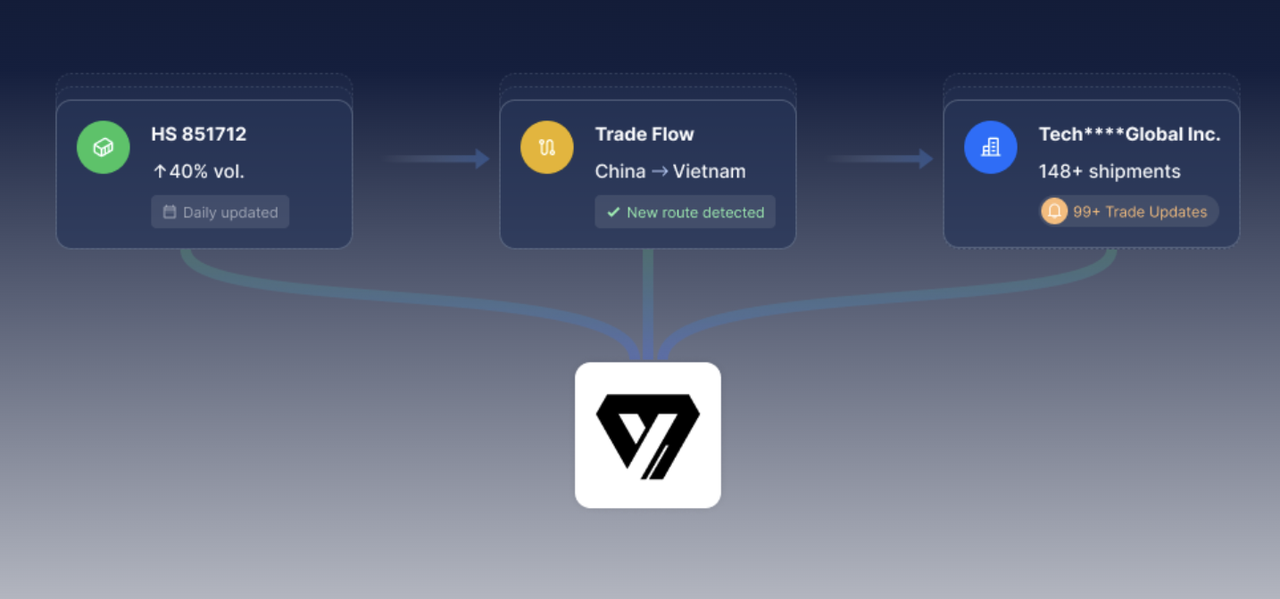
Presenting value before making a sales pitch helps exporters form more meaningful relationships, increases reply rates, and positions your business as a professional, data-informed supplier worthy of long-term cooperation.
4. Through global import–export data platforms
When finding foreign buyers, exporters need more than generic directories or broad market assumptions. The most effective approach today is using verified global trade data to see exactly who is importing your products, in what volume, and from which suppliers. This helps you reach the right buyers with clarity and avoids wasting time on unqualified leads.
With a platform like yTrade's global trade solution for exporters, you can:
- Access one of the world’s largest global trade databases built from verified shipment and customs records across major markets
- Explore over 5 billion import–export records, including product descriptions, HS codes, trade lanes, and counterparties
- View hundreds of millions of importer and exporter profiles, standardized and consolidated using AI
- Gain visibility into global trade flows through yTrade’s Global Trade Data Center, helping you assess your target markets more accurately
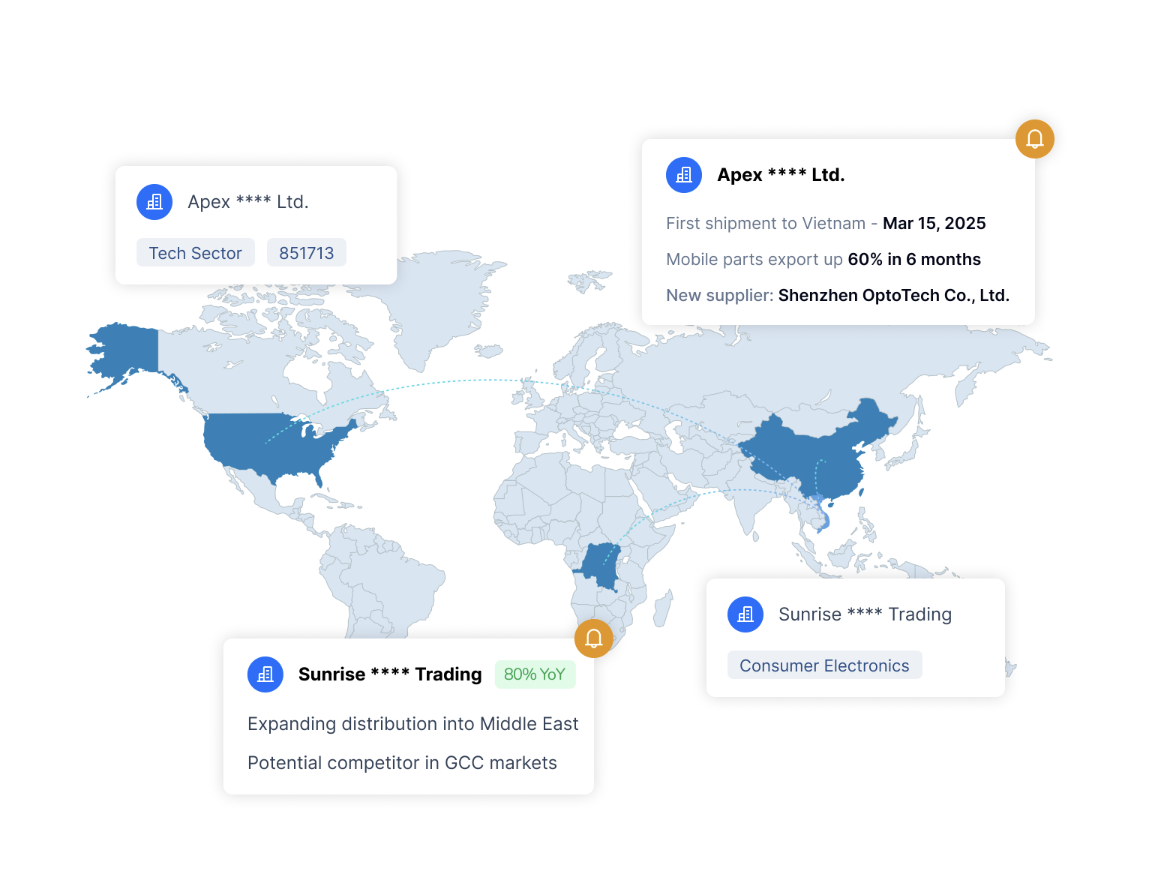
Beyond searching for information, yTrade helps exporters use data to turn insights into real opportunities:
- Identify potential buyers by HS code, product keyword, or destination market, supported by real shipment volumes
- Verify importers before contacting them by reviewing their historical trade activity, partner network, and sourcing behavior
- Analyze competitors by seeing where they export, which buyers they serve, and which markets they dominate
- Spot emerging market opportunities using AI-driven import trend analytics that highlight growing demand by country or product
For example, if you export seafood, yTrade can show which importers in Europe, the Middle East, or North America are actively bringing in the same HS codes, giving you confidence that you’re approaching buyers with proven demand, not cold prospects.
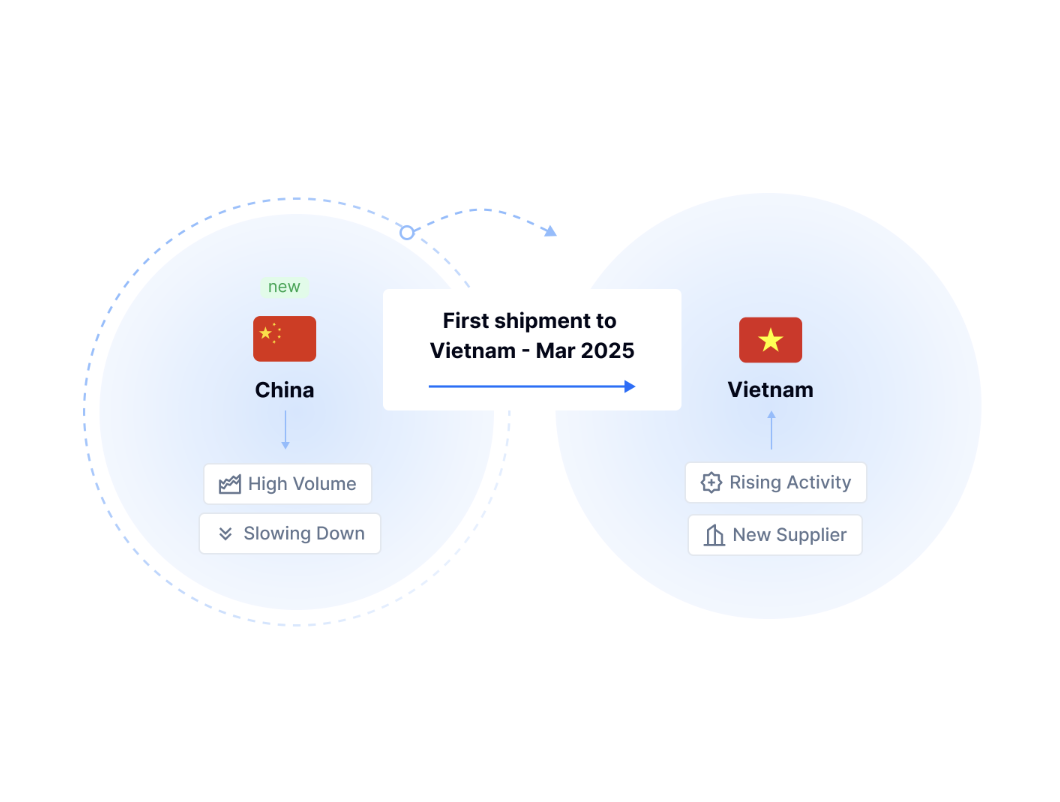
With yTrade, global exporters can turn trade data into a competitive advantage — identifying the right buyers, validating opportunities, and expanding into new markets with greater speed and accuracy. Visit us now!
5. Optimize Google Search
Google remains the world’s most powerful search engine, and most import businesses maintain some form of online presence, whether through websites, company directories, or social pages.
With 9 out of 10 B2B buyers researching online before making purchasing decisions, Google can act as a “market map” that helps exporters identify foreign buyers quickly, proactively, and without intermediaries.
To use Google effectively in how to find international buyers for export, exporters can follow a structured approach:
Firstly, search for potential buyers with precise keyword formulas.
Use targeted search queries combining industry terms, destination markets, and buyer-related keywords. For example:
- “Seafood importers in Japan”
- “Furniture distributors in Germany”
- “Industrial components buyers in UAE”
Include terms like companies, importers, wholesalers, distributors, buyers to widen your reach while maintaining relevance.
Next, filter and verify buyer information.
After identifying potential companies:
- Visit their website to check product lines, certifications, and export/import segments
- Look for contact details such as email, phone, or inquiry forms
- Use LinkedIn to identify the right PIC (Purchasing Manager, Buyer, Sourcing Specialist)
To strengthen accuracy, businesses can cross-check with yTrade to see which countries actively import their HS code or product category. This helps you select the right search keywords and avoid spending time on markets with weak or irrelevant demand.
Then, combine SEO and Google Ads (PPC) for wider reach.
SEO (Search Engine Optimization) means to ptimize your website so buyers can find you organically. Target keywords like:
- “Reliable [product] supplier”
- “[Product] exporter from Asia”
- “[Product] manufacturer for import”
Ensure your site includes product specifications, certifications, company profile, and a clear contact flow.
On the other hand, PPC (Google Ads) enhances faster visibility, you can use Google Ads to appear on the first page for global sourcing keywords. Before running ads, ensure your landing pages, inquiry forms, and company information are professionally prepared to convert traffic into real leads.
6. Send cold emails
Cold emails remain one of the most effective ways to find export customers if executed properly. The key is not spamming, but demonstrating that you have researched the buyer, understand their market, and offer relevant value.
First, you need to prepare a high-quality list of potential buyers, not random contacts.
- Prioritize companies with actual import activity in your product category, using credible trade data sources from yTrade, LinkedIn, or trade directories from chambers of commerce.
- Ensure all emails are verified through tools like Hunter.io or NeverBounce to avoid errors or spam issues.
When writing your cold email, keep it short, clear, and personalized. An effective email should include:
- A brief introduction of your company and products
- A reason for contacting them that links directly to their import activity (Example: “We noticed your company imported CaCO₃ last quarter and wanted to introduce an alternative supply option…”)
- Specific information such as MOQ, lead time, certifications, and trade terms (FOB, CIF…)
- A gentle call to action like: “Could you share the contact of the person in charge of purchasing?” or “Would you be open to a short 10-minute discussion this week?”
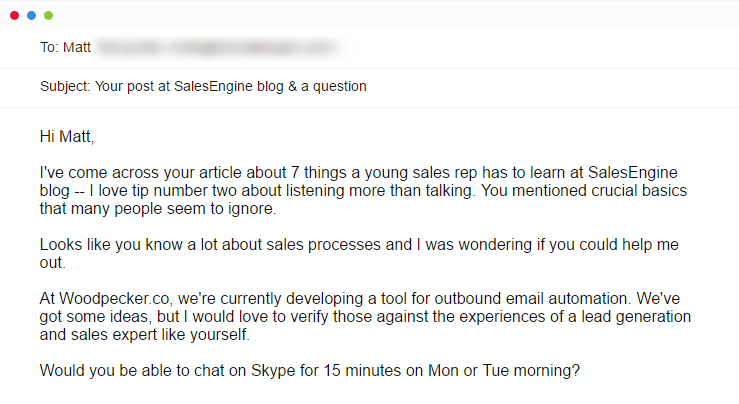
After sending, follow up politely. A reminder email after 3–5 days can include a catalog, quotation, or short case study. If there is no response, stop at the second or third follow-up to avoid appearing intrusive.
Finally, remember that the purpose of cold outreach is not to close the sale immediately, but to open a professional conversation.
A well-structured email backed by accurate trade data, and showing genuine understanding of the buyer’s industry, will earn more trust and increase your chances of forming a real export partnership, instead of ending up in the spam folder.
Conclusion
Finding reliable international buyers is no longer a trial-and-error process. Exporters succeed when they prepare properly, meet export standards, build strong documentation, and choose channels that match how global buyers actually search, like trade fairs, B2B platforms, social media, Google, and well-executed cold outreach. The real shift happens when these methods are supported by verified trade data.
Understanding how to find international buyers for export means knowing which markets have real demand and which importers are active and credible. This is where yTrade simplifies your trade flow, helping exporters validate markets, identify real buyers by HS code, and assess their import history before making contact.
For exporters ready to scale, the next step is simple: use data to target smarter and approach buyers with confidence.
Frequently Asked Questions
Q1: How do I find international buyers?
You can find international buyers through multiple channels: trade fairs, B2B marketplaces, Google search, social media, industry networks, government export programs, and cold outreach.
The most effective exporters today also use verified trade data platforms like yTrade to identify companies that are already importing their products, ensuring they spend time only on qualified buyers.
Q2: What tools can help me find buyers for export?
Several tools support buyer discovery, including:
- Trade directories from government agencies or chambers of commerce
- B2B marketplaces such as Alibaba, Global Sources, and Tradewheel
- Professional networks like LinkedIn
- Verified buyer databases from platforms like yTrade, which show real shipment activity, import volumes, and sourcing patterns
These tools help exporters validate demand, avoid unreliable prospects, and target markets with proven import activity.
Q3: How do I find overseas buyers quickly?
Use a combination of:
- Targeted Google searches (“importers of [product] in [country]”)
- B2B marketplaces where buyers actively source suppliers
- LinkedIn outreach to procurement teams
- Trade data platforms like yTrade to identify importers by HS code or product type
By filtering for companies with real, recent import history, you can shorten the lead time from prospecting to first contact.
Q4: How can I qualify buyers before contacting them?
To avoid wasted outreach, verify:
- Their actual import activity (what they buy and in what volume)
- Their company legitimacy (registration, status, ownership)
- Their supplier history (who they’ve purchased from)
Platforms like yTrade help exporters confirm legitimacy and shipment history before sending the first email — improving close rates and reducing risk.
Q5: How to find an overseas buyer?
To find an overseas buyer, use a multi-channel approach combining B2B marketplaces, trade shows, targeted Google searches, and social media outreach. Strengthen results by verifying import activity through trade intelligence platforms to ensure the buyer has real demand.
Q6: How do I find a buyer for my business?
To find a buyer for your business, build visibility through networking, industry associations, and online platforms that connect sellers with acquirers. Create a clear business profile, highlight financial performance, and prepare documentation for due diligence to build trust and accelerate negotiations.
Q7: How to send export samples to a foreign buyer?
To send export samples to a foreign buyer, classify the shipment correctly, comply with the destination country’s customs rules, and label the package clearly with HS code and value. Use reliable couriers with tracking and agree beforehand on who covers sample and freight costs.
Q8: How to find purchasers?
To find purchasers, identify companies actively importing your product category using search tools, trade directories, and HS-code based trade data. Focus outreach on verified importers to reduce time spent on unqualified prospects and increase your conversion rate.
How Much Steel Does The US Import From The World? (2025 Data)
The U.S. brought in 18.1B kg of steel in 2025 across major supply partners. Read the full breakdown to understand how much steel the US imports and where it comes from.
India Aircraft And Spacecraft HS8802 Import Data 2025 April Overview
India's Aircraft And Spacecraft (HS Code 8802) Import in April 2025 reveals UAE and Germany dominate high-value shipments, with UAE accounting for 35.58% of import value. Data sourced from yTrade.
